
Scientific Name
Wisteria floribunda (Willd.) DC.
Synonym(s)
Dolichos japonicus, Glycine floribunda, Kraunhia floribunda, Millettia floribunda, Phaseolodes floribundum, Rehsonia floribunda, Wisteria multijuga
Common Name(s)
Japanese Wisteria
Scientific Classification
Family: Fabaceae
Subfamily: Faboideae
Tribe: Millettieae
Genus: Wisteria
Origin
Wisteria floribunda is native to Japan.
Flower
Color: White, pink, violet, or blue
Bloom Time: Early to mid-spring
Description
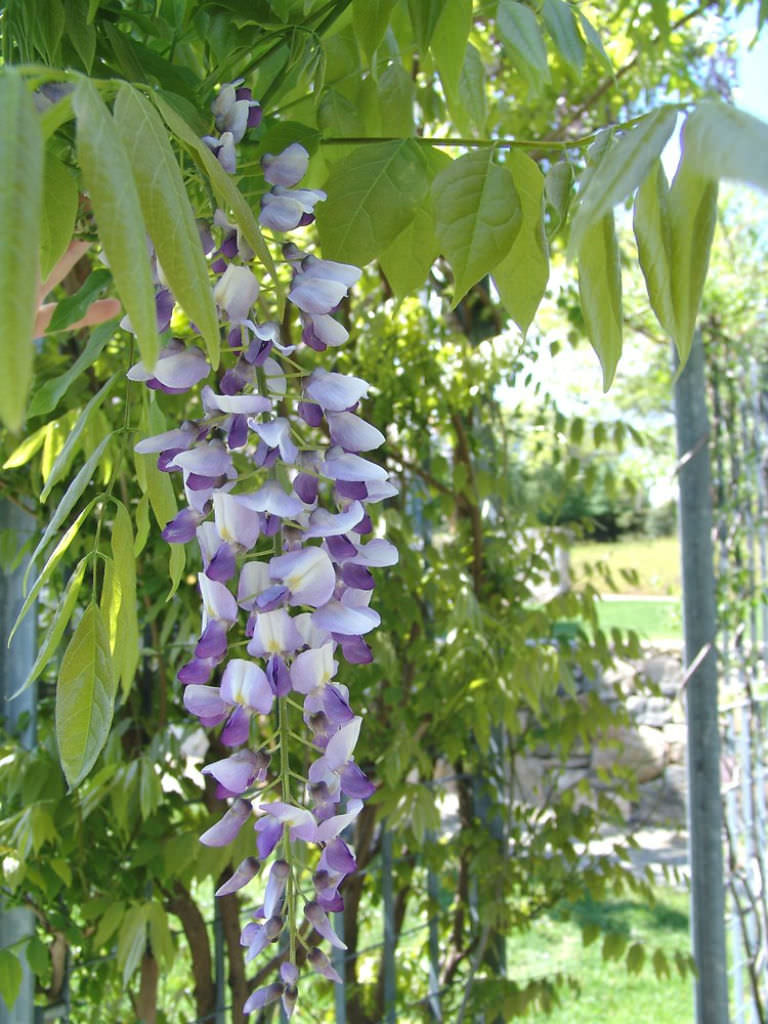
Wisteria floribunda is a woody deciduous twining climber that can grow up to 30 feet (10 m) long over many supports via powerful clockwise twining stems. The foliage consists of shiny, dark-green, pinnately compound leaves up to 12 inches (30 cm) long, with 9 to 13 oblong leaflets, each up to 2.4 inches (6 cm) long. The plant also bears numerous brown, velvety, bean-like seed pods up to 4 inches (10 cm) long that mature in summer and persist until winter.
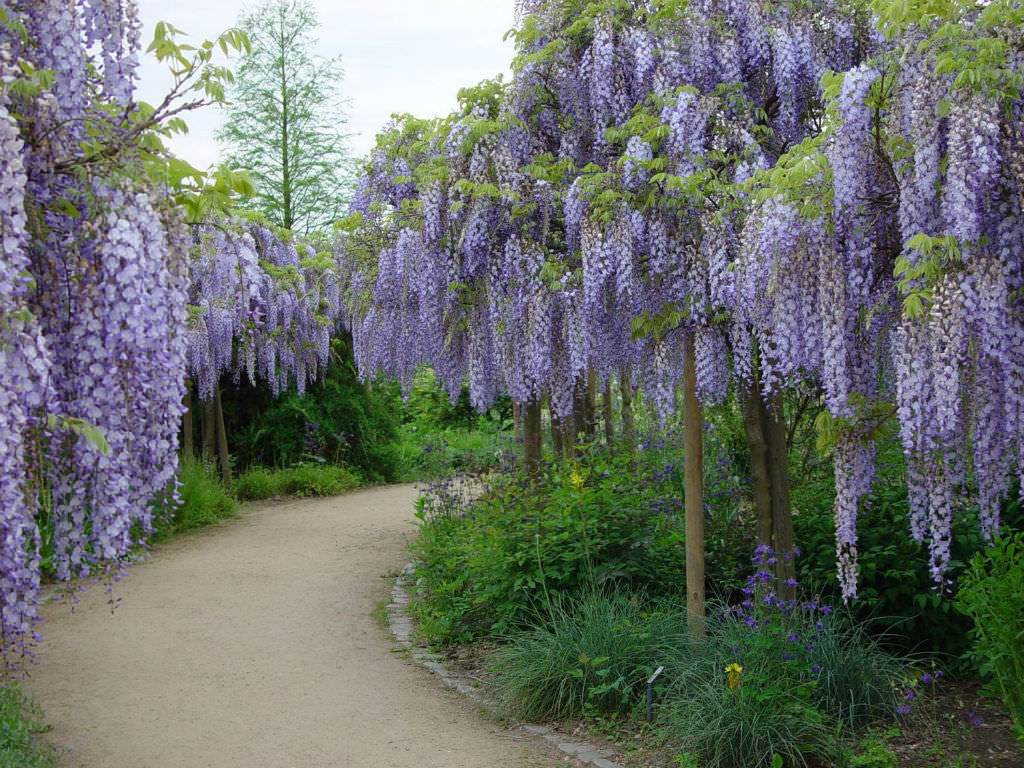
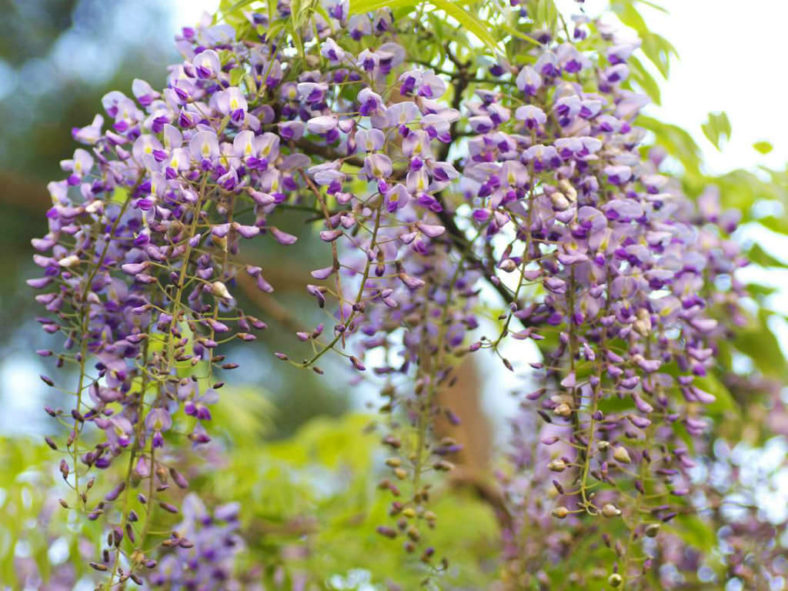
The flowering habit is perhaps the most spectacular of the Wisteria family. It sports the longest flower racemes of any Wisteria. They can reach up to 20 inches (50 cm) in length. These racemes burst into great trails of clustered white, pink, violet, or blue flowers from early to mid-spring.
How to Grow and Care for Wisteria floribunda
Hardiness: USDA hardiness zone 5a to 9b: from -20°F (-28.9°C) to 30°F (-1.1°C).
When growing Wisteria, the most important factor to consider is the location. Wisteria is a twining vine that requires sturdy support and regular pruning to keep it under control. Open areas surrounded by lawns that are easy to mow are ideal for growing Wisteria.
Wisteria doesn't fare well in the cold, so make sure it receives plenty of sunlight. This vine requires deep, fertile soil that is somewhat moist but will tolerate many soil conditions.
Once planted, pruning is about the only important requirement for Wisteria vine care. Since this vine is an aggressive grower, there's no need to fertilize, and, being drought-tolerant, Wisteria requires little watering.
While Wisteria is great for covering an arbor or pergola, training Wisteria vines makes it easier to control. Keep in mind that when training Wisteria vines, the variety may exhibit different twining characteristics. For example, Chinese Wisteria (Wisteria sinensis) twines counterclockwise, while the Japanese variety (Wisteria floribunda) twines clockwise.
See more at How to Grow and Care for Wisteria
Links
- Back to genus Wisteria
- Plantpedia: Browse flowering plants by Scientific Name, Common Name, Genus, Family, USDA Hardiness Zone, or Origin
Photo Gallery
Click on a photo to see a larger version.