
Scientific Name
Arum dioscoridis Sm.
Synonym(s)
Arum dioscoridis var. dioscoridis, Arum eggeri
Scientific Classification
Family: Araceae
Subfamily: Aroideae
Tribe: Areae
Genus: Arum
Origin
Arum dioscoridis is native to forests in the eastern Mediterranean, including southern Turkey, Cyprus, and the Middle East.
Flower
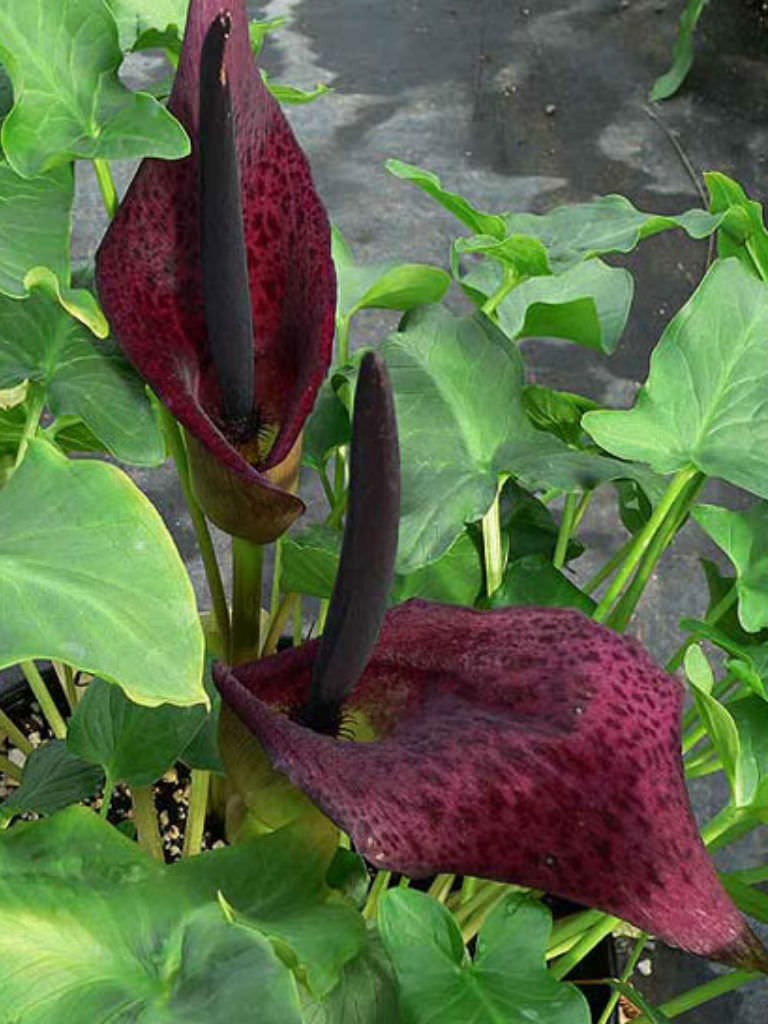
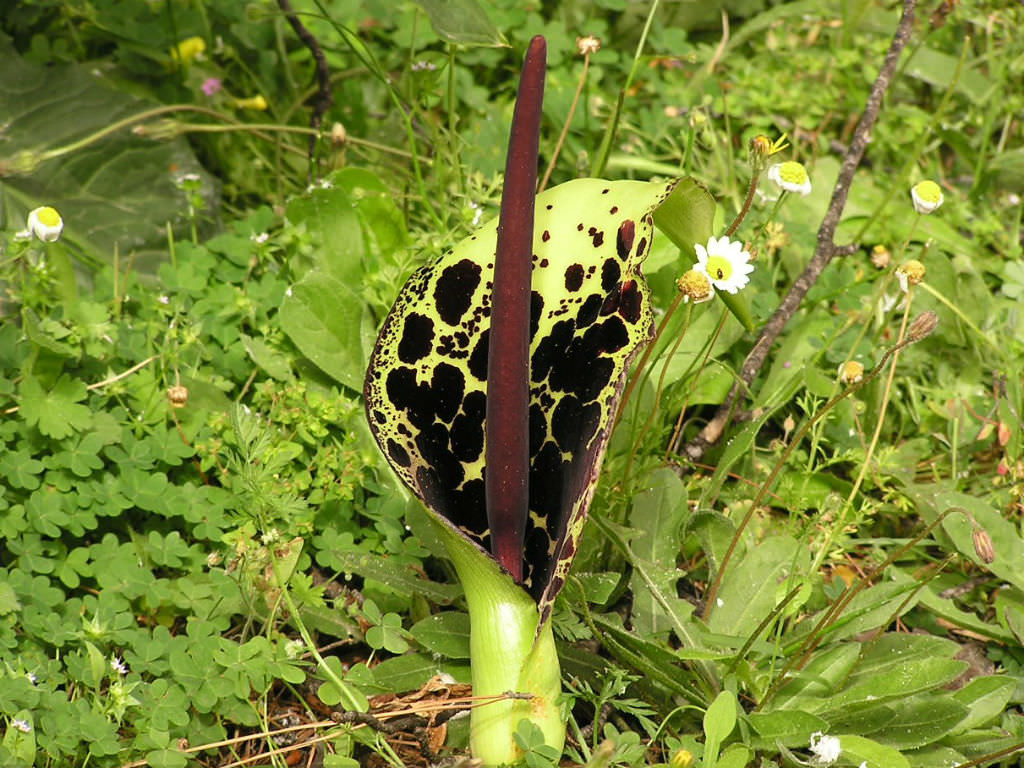
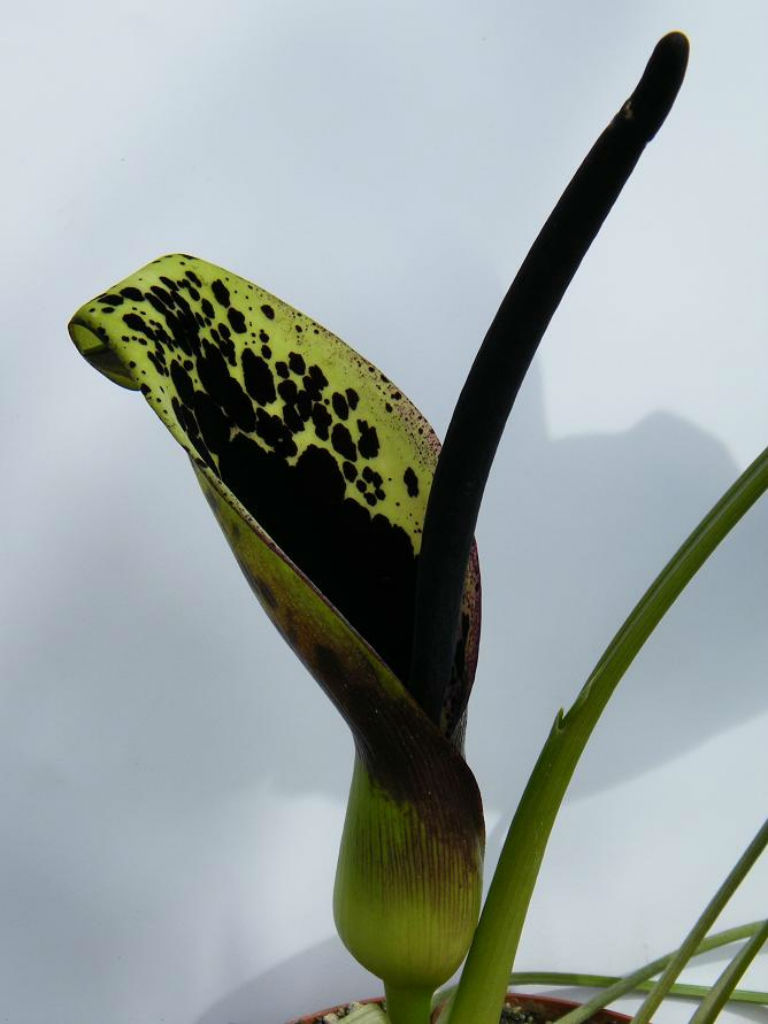
Color: Yellow-green with purple
Bloom Time: Spring
Description
Arum dioscoridis is a perennial plant that grows up to 1 foot (30 cm) tall. In winter, green, arrow-shaped leaves appear.
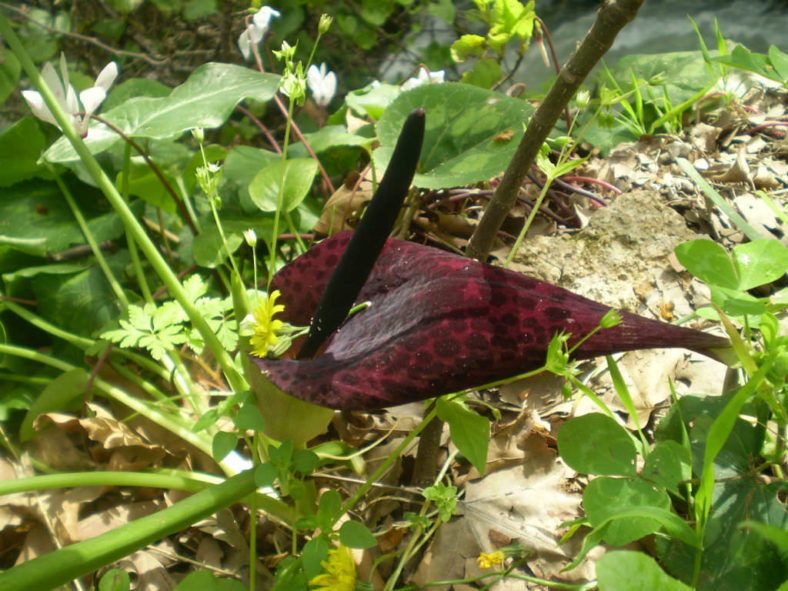
The short-stalked inflorescence appears in spring. It consists of a black, rod-shaped spadix surrounded by a yellow-green, purple-mottled, brown, or even purple bract. The female flowers are located at the bottom of the spadix, above are the male flowers, and the top is a sterile area (appendix).
How to Grow and Care for Arum dioscoridis
Hardiness: USDA hardiness zone 7a to 10b: from 0°F (-17.8°C) to 40°F (4.4°C).
Arums are quite easy to grow. The shade- and part-shade species need moist but free-draining soil. Their biggest threat comes from drought. However, most species are sun lovers and are grown under what is known as the "Mediterranean Cycle," which features warm, dry summers and cool, wet winters. The most important thing with this latter group is drainage. Drainage should be very sharp, as they will not tolerate sitting in water at all.
Feeding is a good idea with Arums, especially if they are in pots. Feed with a high nitrogen liquid feed once a fortnight. This will feed the leaves, which in turn will feed the tuber/rhizome.
When potting up tuberous aroids, use a pot three times the diameter of the tuber.
See more at How to Grow and Care for Arums.
Links
- Back to genus Arum
- Plantpedia: Browse flowering plants by Scientific Name, Common Name, Genus, Family, USDA Hardiness Zone, or Origin
Photo Gallery
Click on a photo to see a larger version.