
Scientific Name
Fritillaria imperialis L.
Common Name(s)
Crown Imperial, Imperial Fritillary, Crown on Crown, Royal Crown Flower, Kaiser's Crown
Synonym(s)
Fritillaria aintabensis, Fritillaria corona-imperialis, Fritillaria imperialis var. imperialis, Imperialis comosa, Imperialis coronata, Imperialis superba, Lilium persicum, Petilium imperiale
Scientific Classification
Family: Liliaceae
Subfamily: Lilioideae
Tribe: Lilieae
Genus: Fritillaria
Origin
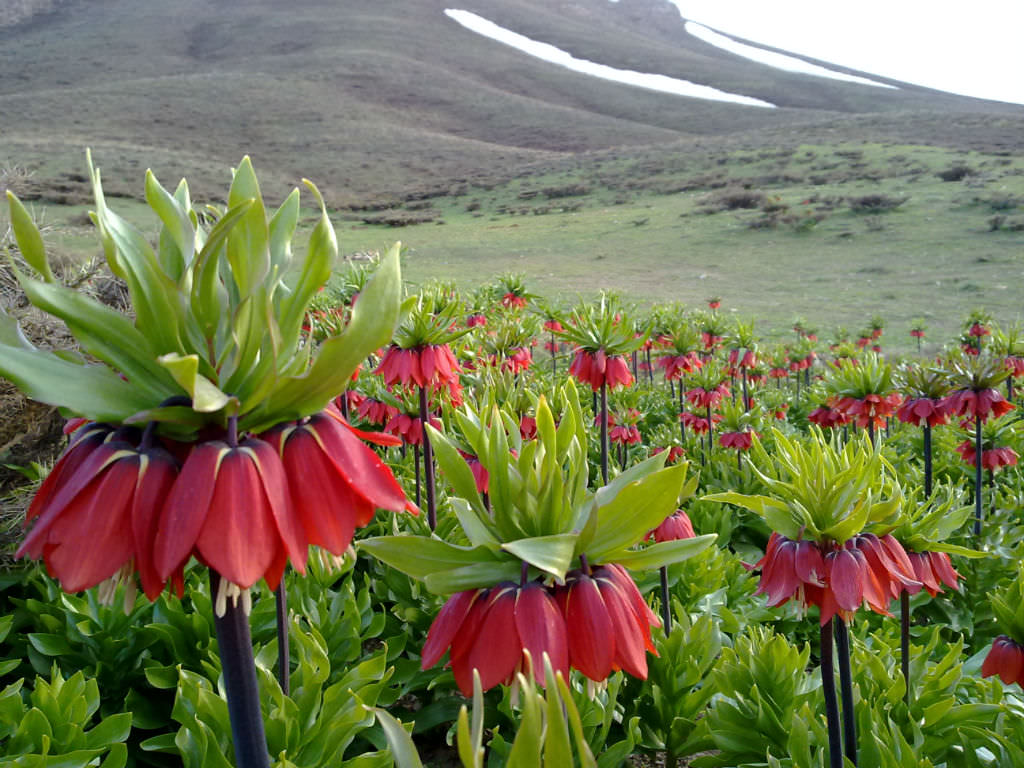
Fritillaria imperialis is native to a wide stretch from Turkey and Iraq across the plateau of Iran to Afghanistan, Pakistan, and the Himalayan foothills.
Flower
Color: Orange-red
Bloom Time: Spring
Description
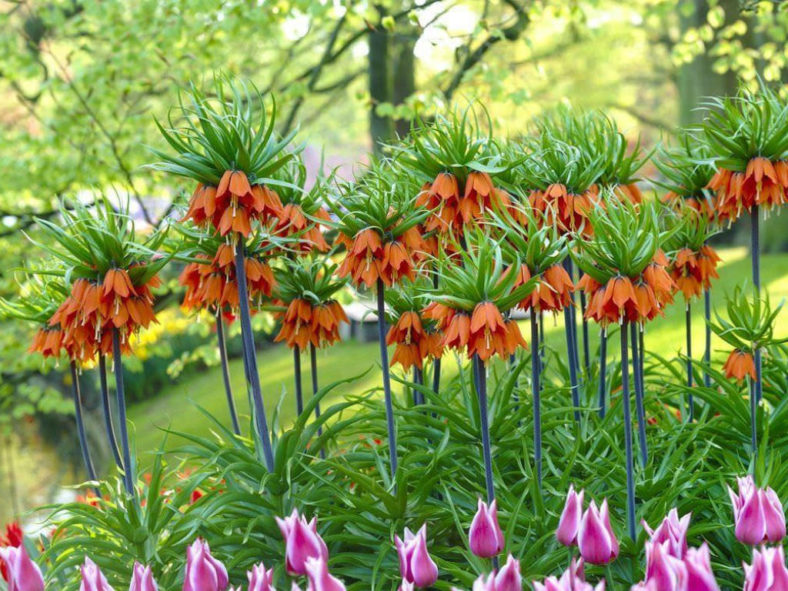
Fritillaria imperialis is an impressive flowering plant that grows up to 4 feet (1.2 m) tall. Each bulb produces a thick, stout, upright, ramrod-straight flowering stem, which rises to 4 feet (1.2 m) tall. The green stem leaves are lance-shaped, up to 6 inches (15 cm) long, with wavy margins, and appear in whorls around the lower 1/2 of the stem.
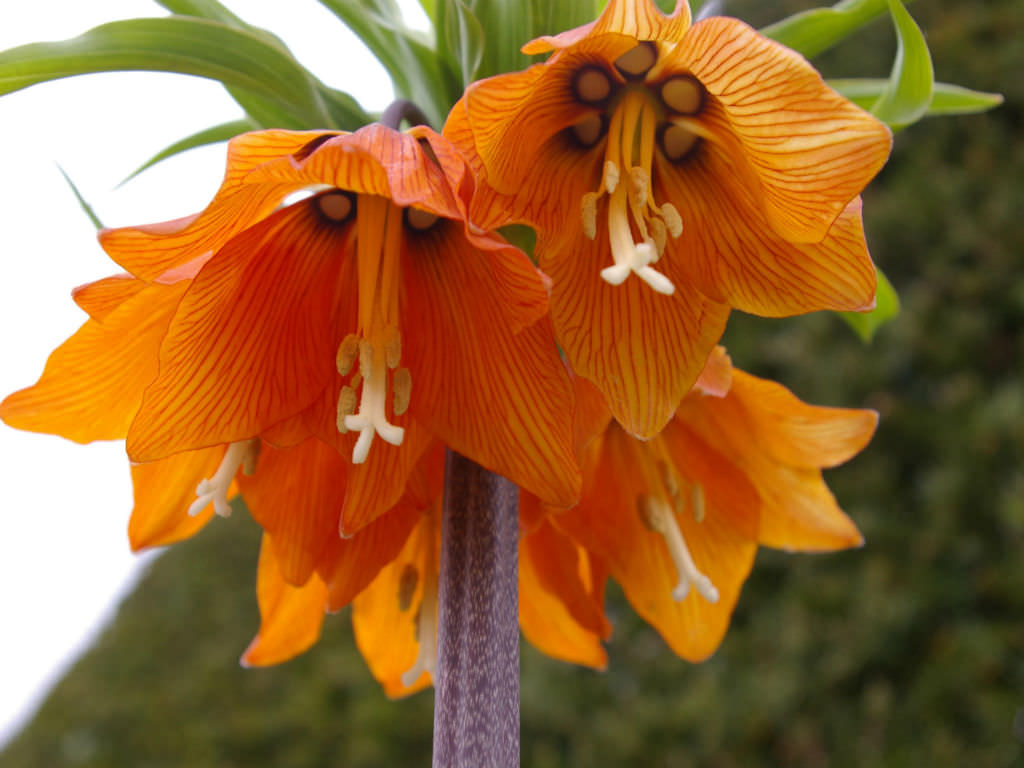
Each stem is topped in spring with a crown of orange-red, drooping, bell-shaped flowers topped by a small pineapple-like tuft of leaf-like bracts.
Cultivars of Fritillaria imperialis
- Fritillaria imperialis' Aurora'
- Fritillaria imperialis 'Maxima Lutea'
- Fritillaria imperialis 'Rubra Maxima'
How to Grow and Care for Fritillaria imperialis
Hardiness: USDA hardiness zone 5a to 8b: from -20°F (-28.9°C) to 20°F (-6.7°C).
Unusual and hardy, Fritillaria bulbs perform best when planted in moist soil in a sunny to part-shade location in the flower bed. Wildflower Fritillaria lilies are an excellent choice for gardeners who want out-of-the-ordinary specimens among more common spring-blooming bulbs.
Growing Fritillaria may reach 4 feet (1.2 m) or more in spring. Use wildflower Fritillarias as specimens, in groupings, or as an addition to a traditional bulb bed.
Be prepared to plant bulbs as soon as they arrive. Plant larger bulbs with the base about 5 inches (12.5 cm) below the soil surface, while smaller Fritillaria bulbs should be planted about 3 inches (7.5 cm) down. Plant bulbs in well-drained soil and keep it moist until the root system is established.
Fritillaria bulbs resist deer, squirrels, and bulb-digging rodents and may help protect other bulbs that are favorites of the critters.
See more at How to Grow and Care for Fritillaria Bulbs.
Links
- Back to genus Fritillaria
- Plantpedia: Browse flowering plants by Scientific Name, Common Name, Genus, Family, USDA Hardiness Zone, or Origin
Photo Gallery
Click on a photo to see a larger version.