
Scientific Name
Scilla siberica Haw.
Synonym(s)
Scilla siberica subsp. siberica, Othocallis siberica, Scilla cernua
Common Name(s)
Siberian Squill, Wood Squill
Scientific Classification
Family: Asparagaceae
Subfamily: Scilloideae
Tribe: Hyacintheae
Subtribe: Hyacinthinae
Genus: Scilla
Origin
Scilla siberica is native to southwestern Russia, the Caucasus, and Turkey. Despite its name, it is not native to Siberia.
Flower
Color: Deep violet-blue
Bloom Time: Early to late spring
Description
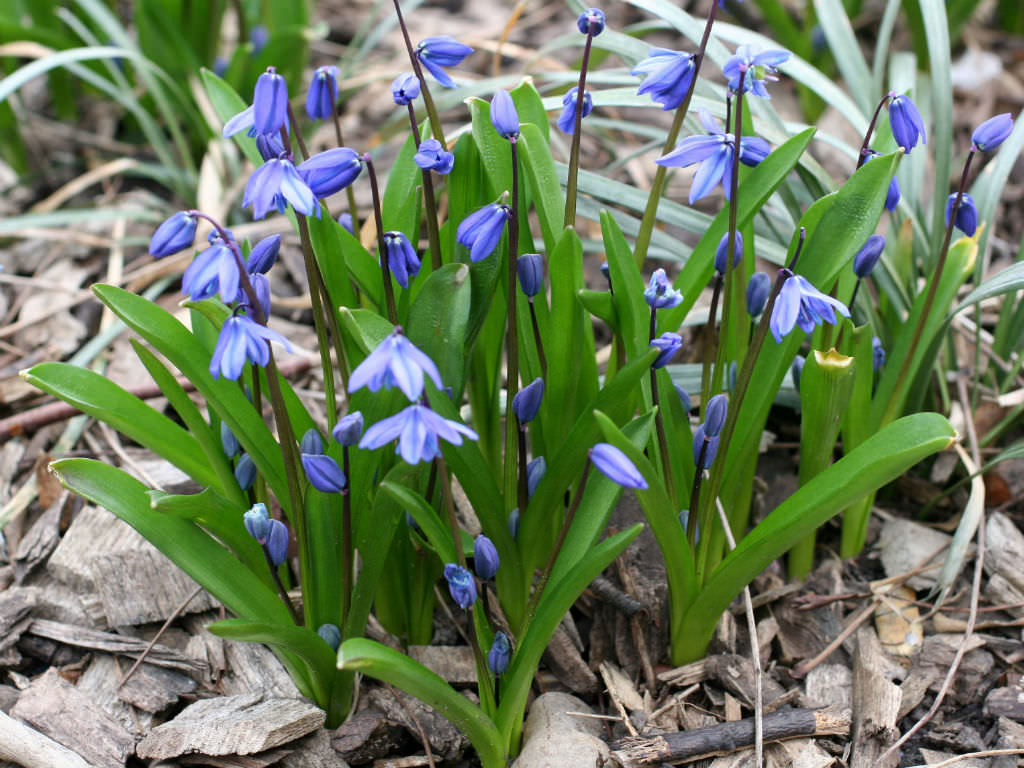
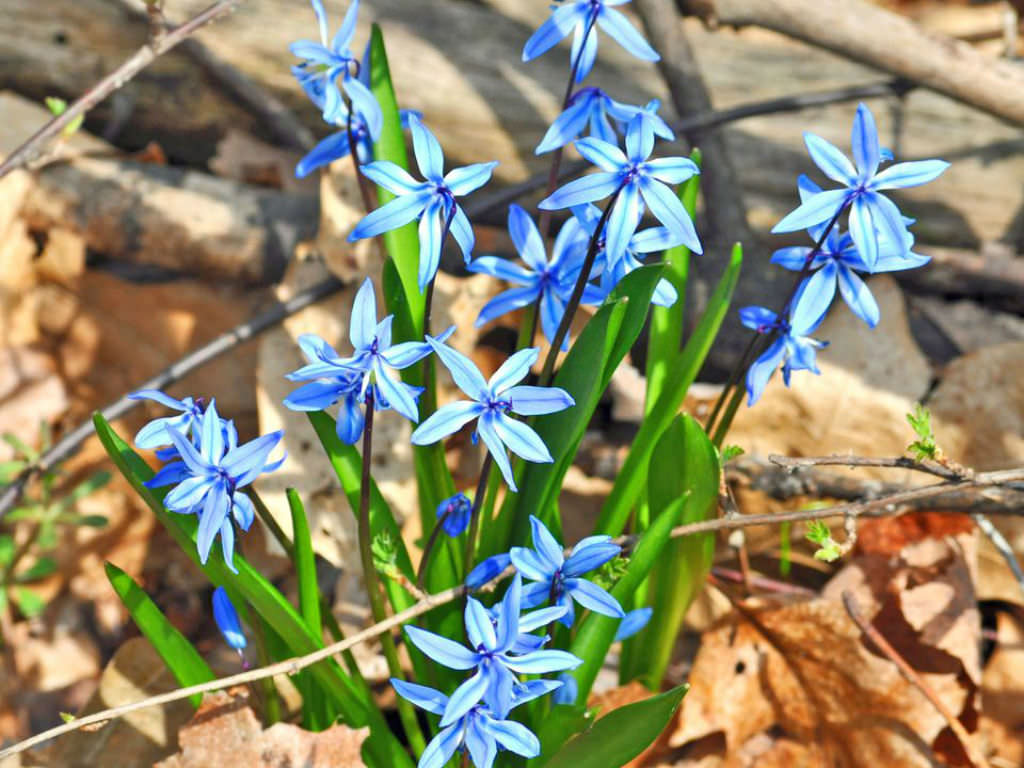
Scilla siberica is a bulbous perennial with 2 to 4 strap-shaped leaves appearing in early spring at the same time as the nodding, blue, bell-shaped flowers.
The flowers have six petals and six stamens and are arranged singly or in racemes of 2 or 3. Petals may be reflexed horizontally when sunlight is bright, but are more often cup-shaped. After flowering, the flower stems become limp as capsules (pods) mature. At maturity, the capsules become purple and split open, releasing small, dark brown seeds.
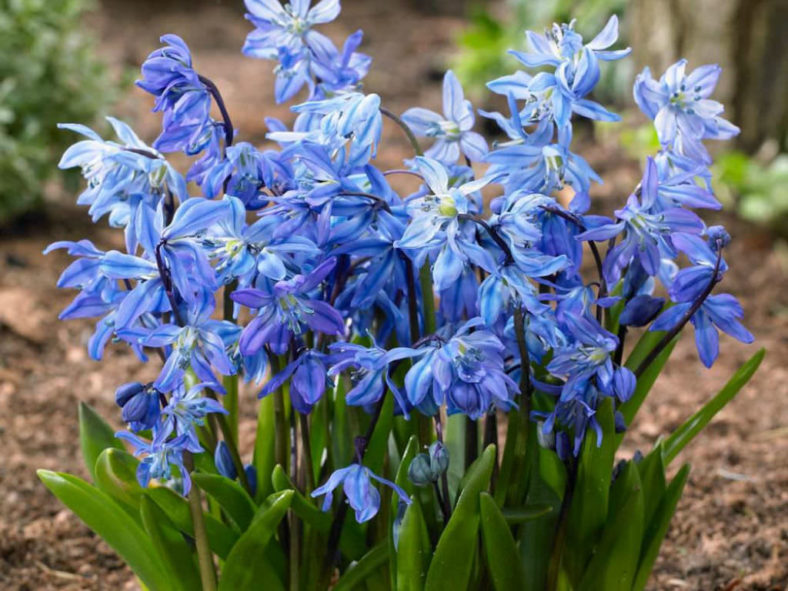
Cultivars of Scilla siberica
How to Grow and Care for Scilla siberica
Hardiness: USDA hardiness zone 2a to 8b: from -50°F (-45.6°C) to 20°F (-6.7°C).
Scilla is adapted to full sun or dappled shade and likes well-drained soil. It naturally grows in rocky wooded areas, so it is just at home in dryish semi-wild parts of the landscape as it is in a rich, moist garden bed. Bulbs should be planted in the fall. Plant the bulbs in loose soil, 3 to 4 inches (7.5 to 10 cm) deep, and 8 inches (20 cm) apart, with the tapered end pointed up. Scilla should receive regular water during the spring flush of growth. However, since the weather is typically cool and moist during this time, water is generally unnecessary. It is important not to overwater, as the bulbs can rot.
The foliage should be left after the flowers fade, though it, too, fades in the heat of summer. Once Scilla leaves are all yellow, they may be cut to the ground, and the plant is allowed to remain dormant until the following spring. It is important that the bulbs not be watered during the dormant period.
See more at How to Grow and Care for Scilla.
Links
- Back to genus Scilla
- Plantpedia: Browse flowering plants by Scientific Name, Common Name, Genus, Family, USDA Hardiness Zone, or Origin
Photo Gallery
Click on a photo to see a larger version.